
Are you tired of people telling you that managing a rental property is a “real business” that requires systems, experience, vendor relationships, legal knowledge, accounting, communication skills, and a whole lot of patience?
Same.
Why would anyone want help with tenant screening, maintenance coordination, rent collection, legal compliance, lease enforcement, marketing, inspections, accounting, and all the tiny details that come with protecting a real estate investment?
Sure, some people hire property managers because they want professional guidance, fewer headaches, and a better chance at long-term profitability. But maybe that’s not your style.
Maybe you prefer a little chaos.
So, in the spirit of keeping things interesting, here are 9 reasons you absolutely do not need a property manager, unless you do.
1. Who needs reliable tenants anyway?
Tenant screening is overrated, right?
Why spend time verifying income, reviewing rental history, checking credit, confirming employment, running background checks, and looking for red flags when you could hand the keys to the first person who shows up with cash and a halfway decent story?
After all, what could go wrong?
Your tenant is one of the biggest factors in whether your rental property becomes a solid investment or a constant source of stress. A good tenant pays on time, communicates reasonably, follows the lease, takes care of the home, and renews when the property meets their needs. A bad tenant can cost you months of unpaid rent, damage to the property, legal fees, eviction costs, vacancy loss, and plenty of sleepless nights.
Most bad tenant situations don’t start with a bad tenant. They start with a weak screening process.
Professional property managers do not just “get a vibe” from an applicant. They follow written rental criteria, verify information, document the process, and apply standards consistently. That matters not only for the quality of your tenancy, but also for fair housing compliance.
But if you enjoy gambling with one of your largest assets, by all means, go with your gut.
2. Maintenance issues are a great way to improve your DIY skills.
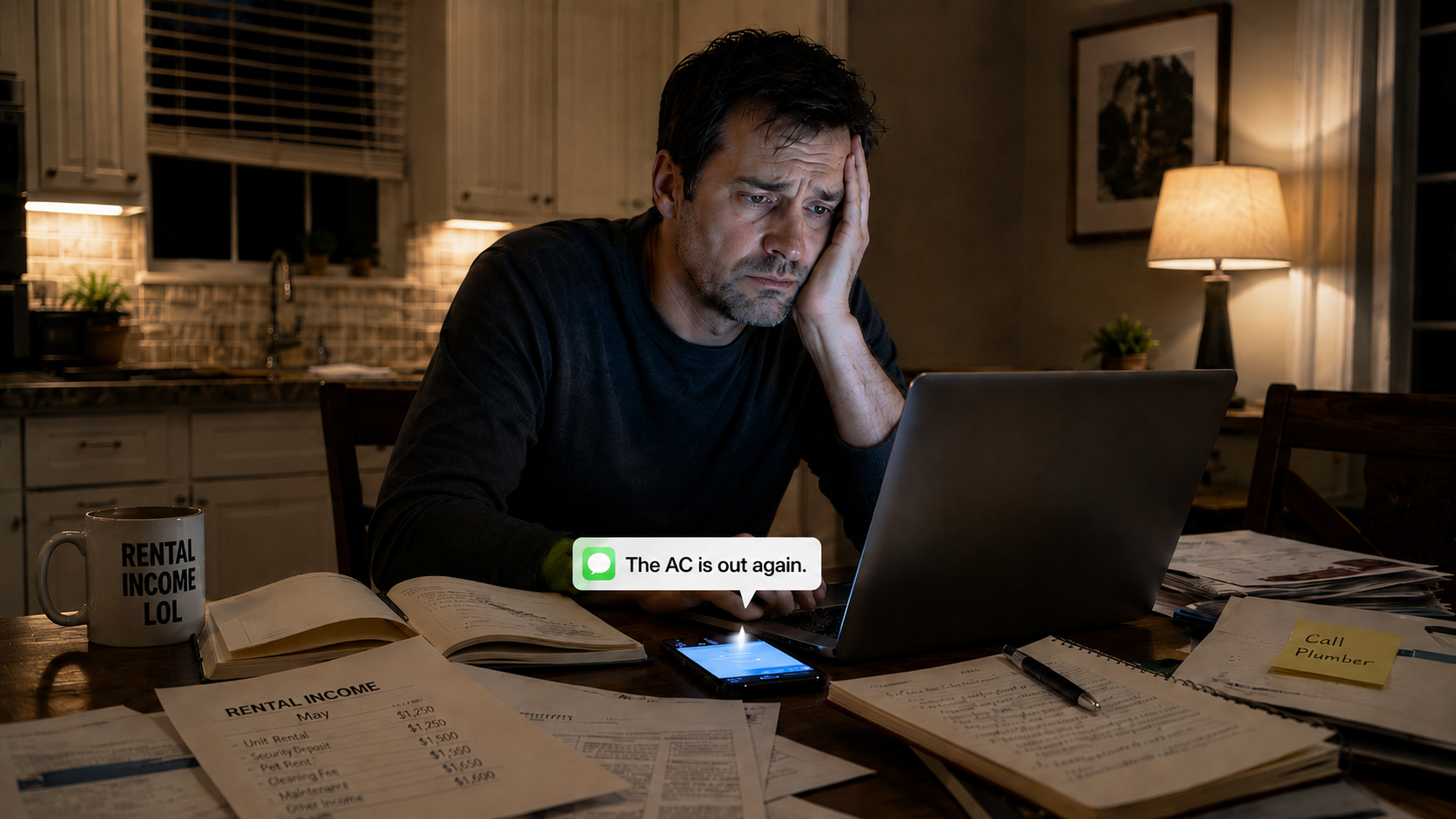
Nothing says “relaxing weekend” like a tenant calling about a leaking water heater, a broken AC, a clogged sewer line, or a ceiling stain that “just appeared out of nowhere.”
The good news? YouTube exists.
The bad news? YouTube does not make you a licensed plumber, HVAC technician, electrician, roofer, or contractor.
Maintenance is one of the most underestimated parts of rental property ownership. It is not just about fixing things when they break. It is about knowing what is urgent, what can wait, who to call, what the repair should cost, when a second opinion is needed, and how to document the issue from start to finish.
A minor maintenance issue can turn into a major expense when it is handled incorrectly or ignored for too long. A small leak can become flooring damage, drywall damage, mold concerns, and an unhappy tenant. A poorly handled AC issue in the middle of a Texas summer can escalate fast. And a vendor who is not properly insured or qualified can create even more risk.
Property managers usually have established vendor relationships, maintenance troubleshooting systems, and processes for determining whether a repair is necessary, reasonable, and owner-approved when needed.
But sure, grab a wrench and hope for the best.
3. Rent collection is easy. Just ask nicely. Or awkwardly. Or repeatedly.
Collecting rent sounds simple until you actually have to do it.
In theory, the tenant pays on the first, the money lands in your account, and everyone moves on with their lives.
In reality, rent collection can turn into reminder texts, excuses, partial payments, promises to pay Friday, awkward conversations, late fees, notices, payment plans, and wondering whether you are being too nice, too firm, or too risky.
Rent collection is not just about getting paid. It is about having a clear lease, consistent enforcement, proper notices, accurate accounting, and a process that does not change with emotion or pressure.
This is where self-managing landlords often get stuck. They want to be kind, which is understandable. But kindness without boundaries can become very expensive. One late payment becomes two. One exception becomes the new expectation. Before you know it, the tenant is behind, you are frustrated, and the relationship feels personal.
A property manager creates separation. We enforce the lease professionally, consistently, and without turning every conversation into a personal conflict. We can be respectful and firm at the same time.
Because “please pay me” is not a rent collection strategy.
4. Landlord-tenant laws are just suggestions, right?
Nothing keeps life exciting like winging legal compliance.
Lease agreements, security deposits, repair obligations, notices, fair housing laws, assistance animals, habitability standards, late fees, eviction procedures, and local requirements all come with rules. Rules that change. Rules that matter. Rules that can cost you money if you ignore them.
A lot of rental owners do not get into trouble because they are trying to do something wrong. They get into trouble because they did not know what they did not know.
That is one of the biggest values of hiring a professional property manager. We live in this world every day. We know the questions to ask, the documentation to keep, the timelines to follow, and the situations that require extra care.
Self-managing landlords often operate reactively. Something happens, they Google it, read three conflicting answers, ask a Facebook group, and then hope they made the right call.
That is not a great legal strategy.
5. Marketing your rental is easy. Just post a couple of photos and wait.
The rental market is competitive. Tenants have options. And first impressions matter.
A strong rental listing is not just about throwing the property online and waiting for messages to roll in. It is about pricing the home correctly, taking quality photos, writing a clear and compelling description, highlighting the right features, syndicating the listing properly, responding quickly to inquiries, scheduling showings efficiently, and making the application process easy.
A poorly marketed property can sit longer than necessary, and every extra day vacant is money out of your pocket.
Sometimes owners want to “test the market” with a higher rent. That sounds harmless until the home sits for weeks, the listing gets stale, and the total vacancy loss outweighs the extra rent they were hoping to get.
Property managers look at market data, comparable rentals, condition, timing, demand, and pricing strategy. The goal is not just to get the highest rent possible. The goal is to secure a qualified tenant at a strong market rent in a reasonable amount of time.
Because “available now” should not become the property’s permanent personality.
6. Insurance? Surely nothing bad will happen.
Rental properties come with risk.
Someone could get hurt. A pipe could burst. A tenant could cause damage. A storm could roll through. A vendor could get injured. A pet could bite someone. A tree could fall. A small issue could turn into a large claim.
Insurance is not exciting, but neither is paying out of pocket for something that could have been covered.
Property managers are not insurance agents, but we do regularly see where owners expose themselves to unnecessary risk. We help remind owners to carry appropriate landlord policies, require tenants to maintain renters’ insurance when applicable, and make sure maintenance work is handled by properly insured professionals.
The goal is not to be dramatic. The goal is to be protected.
Hope is not coverage.
7. Tenant relationships are overrated. Just ignore the complaints.
Tenants are people. They want to be heard, respected, and treated fairly.
That does not mean they get everything they want. It does not mean every complaint is valid. It does not mean owners should approve every request. But it does mean communication matters.
One of the fastest ways to create tension with a tenant is poor communication. Ignored maintenance requests, vague answers, delayed responses, inconsistent enforcement, and emotional replies can all turn a manageable situation into a bigger problem.
A good property manager knows how to communicate professionally. We can explain decisions, set expectations, enforce the lease, document conversations, and keep things from becoming unnecessarily personal.
Tenant retention matters, too. A good tenant who renews saves you money. Turnover means vacancy, make-ready costs, utilities, cleaning, repairs, marketing, leasing time, and risk. Maintaining a positive relationship with a good tenant is not just nice. It is profitable.
But if your preferred communication style is “deal with it,” best of luck.
8. Profit is overrated. Just charge whatever feels right.
Owning a rental property is not just about collecting rent.
It is about performance.
Are you charging the right rent? Are your expenses reasonable? Are you planning for maintenance? Are you tracking cash flow? Are you reviewing your statements? Are you setting aside reserves? Are you making decisions based on numbers or emotions?
Some owners underprice their rentals because they are afraid of vacancy. Others overprice and create vacancy. Some approve every repair without question. Others delay necessary maintenance and create higher costs later. Some forget to factor in leasing fees, turnover, taxes, insurance, HOA dues, repairs, and capital expenses.
A property manager helps you look at the property like an investment, not just a house you happen to own.
No, we cannot control every market condition or guarantee there will never be an expense. But we can help you make informed decisions, reduce avoidable losses, and understand what is happening with your property financially.
Because “I think I’m making money” is not the same as knowing.
9. Who needs free time anyway?
The biggest myth about self-managing a rental property is that it is passive income.
Rental income can be a beautiful thing. But managing the rental? That is active.
Tenants do not only have questions during business hours. Maintenance does not wait until your calendar is clear. Rent issues do not care that you are on vacation. Move-outs, inspections, make-readies, applications, lease renewals, notices, accounting, and vendor coordination all take time.
And if you own more than one rental, that time multiplies quickly.
A property manager gives you back your time. We become the point of contact. We handle the day-to-day. We manage the process, communication, documentation, and details, so you are not constantly pulled into every issue.
That does not mean you will never hear from us. You should know what is happening with your investment. But you should not have to personally manage every loose doorknob, late payment, showing request, or tenant complaint.
You bought an investment. You did not adopt a second full-time job.
So, do you really need a property manager?
Maybe not.
Some owners are organized, experienced, legally informed, responsive, emotionally steady, and genuinely enjoy managing their own properties. If that is you, great. Self-management can work when it is treated like a business and done well.
But for many rental owners, the reality is different.
They are busy. They are unsure about the laws. They do not have trusted vendors. They hate awkward tenant conversations. They are tired of chasing rent. They do not know if they are charging the right amount. They are overwhelmed by maintenance. They are worried about making the wrong call. Or they do not want their rental property to take over their life.
That is where a professional property manager can make all the difference.
At the end of the day, property management is not just about collecting rent and calling a handyman. It is protecting the property, supporting the tenant relationship, reducing risk, managing money, solving problems, and helping owners make better decisions.
So yes, technically, you may not need a property manager.
You can absolutely wing it.
But if you would rather have systems, support, experience, and a team that knows what to look for before things become expensive, then it may be time to stop doing everything yourself.
Your rental property should work for you.
Not the other way around.